
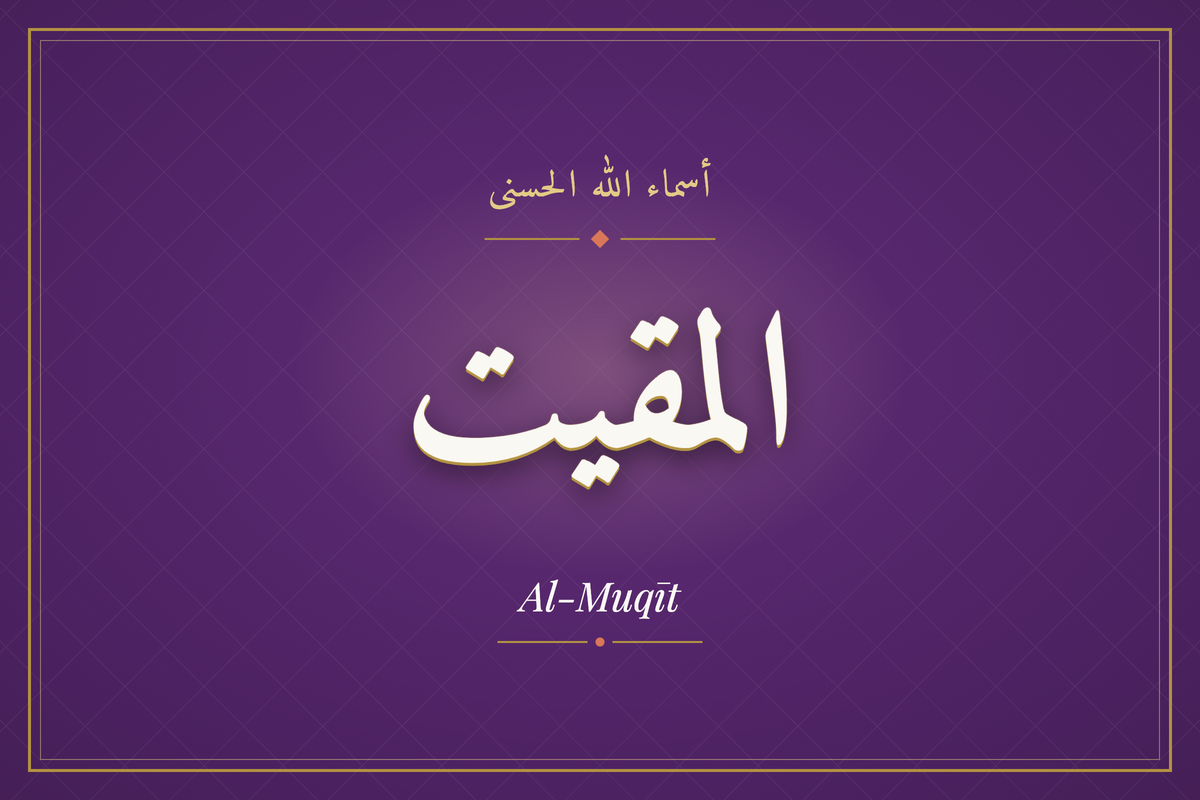
Al-Muqīt (المُقِيت), "The Sustainer," "He who provides the subsistence of every creature," is the Name of Allah that addresses one of our oldest anxieties: how will we live tomorrow? From the whale of the oceans to the ant under the stone, every mouth receives its share, measured and delivered by Al-Muqīt — He who nourishes and is not nourished.
What does Al-Muqīt mean?
The name Al-Muqīt is connected to the Arabic word qūt (قوت): sustenance, the portion of livelihood that keeps alive. Exegetes recognize several complementary meanings for it:
- The Provider: He creates sustenance and brings it to every creature, body and soul — for the heart too has its nourishment: faith and remembrance.
- The Preserver-Witness: He who is present at all things, guards them and keeps account of them.
- The Mighty: He who has full power over all things; it is in this broad sense that many scholars read the verse from Surah An-Nisā'.
Al-Muqīt in the Quran
The name appears only once in the Book of Allah:
وَكَانَ اللَّهُ عَلَىٰ كُلِّ شَيْءٍ مُّقِيتًا
« And Allah is, over all things, Muqīt — Guardian, Provider, Capable. » (Surah An-Nisā', 4:85)
Its reality, however, runs throughout the entire Quran:
وَمَا مِن دَابَّةٍ فِي الْأَرْضِ إِلَّا عَلَى اللَّهِ رِزْقُهَا
« There is not a beast on earth but that Allah is responsible for its sustenance. » (Surah Hūd, 11:6)
Not a single creature is forgotten in the distribution. The Prophet ﷺ said: « If you placed your trust in Allah as He deserves, He would provide for you as He provides for the birds: they leave in the morning with empty bellies and return in the evening satisfied. » (reported by At-Tirmidhī) — trust that does not exclude effort: the bird, too, leaves its nest.

Living with Al-Muqīt in Daily Life
1. Work without anxiety about tomorrow
The believer takes the means — trade, business, savings — but knows that each person's portion is already measured with Al-Muqīt. This certainty extinguishes panic, greed, and jealousy: no one will consume another's share.
2. Never gain through the unlawful
Since sustenance comes from Allah, seeking it through His disobedience is senseless. What one "gains" through fraud adds nothing to one's portion; it only removes the blessing from it.
3. Provide for those in your care — and beyond
The Prophet ﷺ said: "It is a sufficient sin for a man to neglect those he must provide for." (reported by Abū Dāwūd) Serving a meal to one's family, feeding the poor: this is participating, to one's measure, in the distribution of which Al-Muqīt is the source — and one of the deeds most beloved to Allah.
Invocation with the Name Al-Muqīt
Allah says: "Call upon Him by His most beautiful Names" (7:180). Before eating, the believer says Bismillāh, and after the meal the Prophet ﷺ praised Allah: الْحَمْدُ لِلَّهِ الَّذِي أَطْعَمَنِي هَذَا وَرَزَقَنِيهِ مِنْ غَيْرِ حَوْلٍ مِنِّي وَلَا قُوَّةٍ
"Praise be to Allah who has fed me this and granted it to me without any power or strength on my part." (reported by Abū Dāwūd and At-Tirmidhī) One can also ask: "Yā Muqīt, urzuqnā halālan tayyiban" — "O Sustainer, grant us lawful and pure sustenance."

Frequently Asked Questions about Al-Muqīt
What is the difference between Al-Muqīt and Ar-Razzāq?
Ar-Razzāq designates the Provider of all forms of sustenance, in the broadest sense. Al-Muqīt is more precise: it evokes the qūt, the vital portion that sustains each creature, conveyed to those entitled to it, with the added meanings of guardianship and complete capability.
How many times does Al-Muqīt appear in the Quran?
Only once, in verse 85 of Surah An-Nisā': "Allah is, over all things, Muqīt." This sole mention is sufficient to establish a Name that all creation illustrates at every meal.
Does Al-Muqīt also nourish hearts?
The scholars have emphasized it: Allah created nourishment for bodies and nourishment for hearts—faith, the Quran, remembrance. Whoever complains of the aridity of their heart should ask themselves what they feed it with.
📚 Continue your reading of the 99 Names
−5 % off the entire library with code BLOG5
Valid across the entire site, with no minimum purchase—our thanks to blog readers.
Discover our books on the Names of Allah


